

Females On The Spectrum And Their Younger Appearance
Have you ever noticed that many autistic women seem to have an almost timeless quality about them — often appearing much younger than their actual age? This is something that many autistic individuals, especially females, report experiencing. While there isn’t one definitive answer, a combination of biological, psychological, and social factors likely contributes to this phenomenon.
1. Distinct Facial Features & Genetics
Some research suggests that autistic individuals may have subtle differences in facial structure. Features such as rounder faces, larger eyes, or softer facial expressions can contribute to a more youthful appearance. Additionally, genetic factors that influence both autism and physical development may play a role in slower aging or different facial symmetry.
2. Less Sun Damage & Different Skincare Habits
Many autistic individuals have sensory sensitivities, including an aversion to certain textures, scents, and environmental factors. This can result in avoiding excessive sun exposure (which reduces UV-related aging), using minimal skincare products, or favoring gentle, non-irritating products that preserve skin health over time.
3. Body Language & Expressiveness
Autistic women may display more open, childlike, or less inhibited expressions compared to neurotypical adults. They might smile more, use animated facial expressions, or exhibit mannerisms that are unconsciously associated with youth. Additionally, some autistic people have difficulty mimicking the social cues of ‚mature’ adult behavior, leading to a perception of being younger.
4. Dressing Comfortably Over Fashionably
Many autistic women prioritize comfort over conforming to adult fashion trends. Loose, casual, or ‚cute’ clothing, a preference for soft fabrics, or avoiding makeup and hairstyling routines that neurotypical peers adopt can result in a more youthful presentation. Some may also struggle with fashion-related social norms, leading them to dress in ways that read as ‚younger’ in mainstream society.
5. High Energy Levels Or Playful Demeanor
Some autistic individuals maintain a strong sense of curiosity, enthusiasm, and playfulness well into adulthood. Their natural interests might align more with hobbies or aesthetics typically associated with younger individuals, reinforcing the perception of youthfulness.
6. Delayed Or Atypical Social Development
Autistic women often describe feeling ‘out of sync’ with their peers, either appearing socially naive or maintaining a certain level of innocence. This difference in social development can create an impression of being younger, especially when neurotypical peers exhibit more traditionally ‚adult‘ behaviors like assertiveness, social hierarchy navigation, or certain speech patterns.
7. Hyperfocus On Special Interests Instead Of Stressful Social Norms
While many neurotypical adults shift focus to career advancement, financial stress, and social politics, autistic individuals may remain deeply engaged in their passions and hobbies. This ability to maintain childlike enthusiasm and avoid the burnout associated with societal pressures might have indirect benefits on physical aging.
8. Different Stress Responses & Emotional Processing
While many autistic individuals experience high anxiety and stress, they may process emotions differently. Some develop strong coping mechanisms that prevent deep-set worry lines, while others naturally avoid high-stress environments or social conflicts that accelerate aging in neurotypical individuals.
Final Thoughts
There’s no single reason why many autistic women appear younger than their age — it’s likely a mix of genetics, lifestyle habits, and differences in social behavior. Whether it’s avoiding excessive sun exposure, maintaining a sense of curiosity, or simply not conforming to aging-related societal expectations, the autistic experience often results in an ageless, unique presence.
Have you experienced this yourself or noticed it in others? Share your thoughts in the comments!
Since this topic affects me personally, i was intrigued when i stumbled across an article online, and came to realization that i’m not just an exception, and this is in fact quite common, especially amongst females on the autism spectrum. This discovery then lead me to delve a bit deeper into this, doing some research, wanting to educate, and share my thoughts, and personal experiences with you..
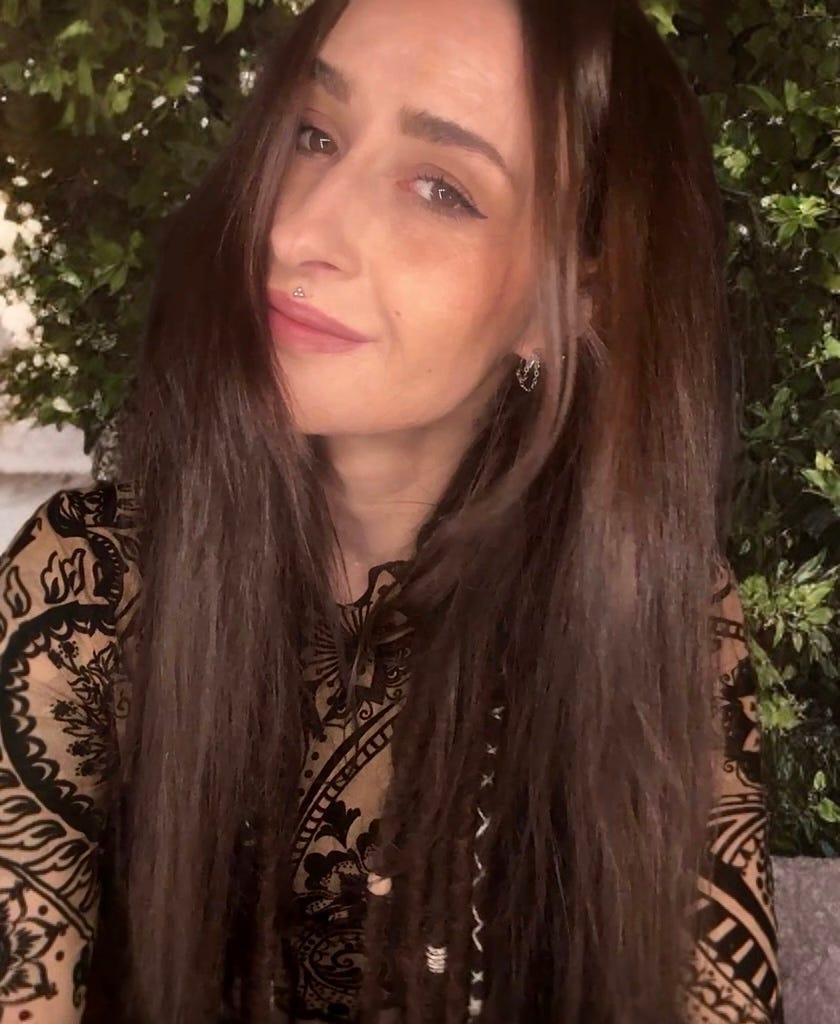
Trapped in Time – ‚Forever 25 Club‘
Living as a 42-year-old woman who looks 25, (average guessed), and for as long as I can remember, people have always perceived me to be much younger than I actually am. At 42, I am still constantly getting mistaken for someone who’s in their mid-twenties, and while some might see this as a blessing, for me, it has always been a double-edged-sword.. one that affects not only how I am treated by society but also how I see myself.
A Petite Frame That Never Grew Up
Standing at 148 cm (4’10“) and weighing 42 kg (92 lbs), my body hasn’t developed in the way an adult women’s body would. Unlike many women my age, I hardly developed the curves typically associated with femininity. While some might call it ‚petite’ or ‚childlike‘, for me, it often feels like being stuck in a teenager’s body. A blessing and a curse. Due to a birth-defect named Proximal Femural Focal Deficiency – PFFD (born with a shorter leg — i had to undergo 2 painful leg-lengthenings; age 7 & 16), and of course genetics — my physical growth was affected, leaving me with a body that in some ways, never fully outgrew adolescence.
The medical term that doctors commonly use to refer to someone below 150cm (4’11“) is called: „Proportional Dwarfism“.
Another medical term that could describe my experience is „Childlike Phenotype Persistence“, though this is not a widely recognized diagnosis. More commonly, aspects of cases similar to my condition could be described as using terms like:
• Hypoplastic Development — Referring to underdevelopment of certain body structures.
• Constitutional Delay of Growth and Puberty (CDGP) — A condition where physical development lags behind typical age expectations.
• Infantilization — A social/psychological term for being treated as a child despite being an adult.
• Petite Phenotype — Used in medical and genetic contexts to describe a lifelong small stature.
• Childlike Woman/ Lolita — This term is often used to describe a young-looking, petite, or childlike woman, often sexualised, particularly in a way that carries a mix of innocence and perceived sensuality.
Since PFFD (Proximal Femoral Focal Deficiency) is already part of my medical background, it contributes to my overall petite stature and youthful appearance. Additionally, being on the autism spectrum — where ‘childlike’ emotional and behavioral traits come into play — further influences how people perceive me.
The Social Consequences of Looking Young
Being perceived as younger than my actual age has shaped my life in ways that go far beyond appearances. People assume I am inexperienced, naive, weak, or even incapable. I struggle to be taken seriously, to have my opinions heard, or to gain the respect I would deserve as an adult.
I can’t count how many times I’ve been ignored in conversations, dismissed as if my words carry no weight. In professional settings, I’ve had to fight harder to be recognized, often feeling like I need to prove myself twice as much as others. And then there’s the infantilization – the way people talk down to me, and treat me like a child.
The Unwanted Attention
Another painful aspect of looking young is the way men perceive me. I have been treated like a doll – literally. Some have grabed, and lifted me up without my consent, and as if I were some kind of toy or a novelty item, making matters worse by saying things like: „oh, you’re such a lightweight – perfect for all kinds of positions“, (we all know what went through their dirty minds – and for the people who don’t: never mind, keep your innocence). And other rather nasty comments. It’s dehumanizing and violating, and yet, it happens. My petite appearance seems to strip away my autonomy in their eyes.

Trapped in a Cycle
What makes this even harder is how my treatment by others has shaped my own behavior. When people continuously see you as a child – when they mock you, dismiss you, or refuse to let you grow – it’s hard not to internalize that. Over time, I found myself adapting, staying in that position because that’s where society kept me. It’s not that I never wanted to mature, but when the world around you doesn’t allow you to step into your full adulthood, where do you go?
Still Having to Prove My Age
Even at 42, I still sometimes have to show my ID. At first, i took it as a compliment, and it was amusing. But as the years went by, it became frustrating. It’s not just about the inconvenience – it’s the constant reminder.
More Than Just My Appearance
I know that genetics, and other factors, aswell as being on the autism spectrum all play a role in this. My facial features, body structure, body language, and even my emotional expressions, and behavior may contribute to the illusion of youth. But beyond that, it’s the way society has treated me that has kept me in this space. Looking young isn’t just about how I appear — it‘s about how I have been forced to navigate a world that refuses to acknowledge my full adulthood.
I don’t wish to ‚look older‘. What I truly want is to be respected as the adult that I am. To be taken seriously. To be seen beyond my size, my face, and my perceived innocence. To not to be sexualised. I want to exist in a world where I don’t have to fight for my autonomy every single day.
Do you relate to this experience? Have you also struggled with being perceived as younger than you are? And what hat issues did you face? I’d love to hear your thoughts and experiences.
Now, to conclude, i would like to highlight some positive aspects of appearing much younger than you actually are.
Being perceived as much younger than your actual age can, in fact, have several positive aspects, including:
Youthful Appearance
• Fewer visible signs of aging, such as wrinkles or gray hair.
• People often admire youthful looks and associate them with good health.
Longer Perceived Vitality
• Others may assume you have more energy and stamina.
• Can create opportunities in fields where a youthful image is valued.
Social & Psychological Benefits
• Receiving compliments about looking younger can boost self-esteem.
• May feel a stronger connection with younger generations.
Health Advantages
• If the youthful appearance is linked to genetics or lifestyle, it may indicate slower aging.
• Less exposure to harmful habits (e.g., excessive sunbathing, smoking) could contribute to longevity.
Potential Career & Social Benefits
• In certain professions, looking younger can be advantageous (e.g., entertainment, modeling, customer-facing roles).
• Some people find it easier to make friends across different age groups.
More Time to be seen as ‚Young‘
• Society often associates youth with opportunity, adventure, and flexibility.
• Can delay societal pressures tied to aging, such as expectations of settling down or retiring.
Element of Surprise
• People may be impressed when they learn your real age, making for interesting conversations.
• Can be fun to defy expectations and challenge stereotypes.
While being mistaken for someone younger can have its downsides, embracing the positives can help shift perspective and make the experience more enjoyable!

Thanks for reading The Slightly Strange by MissRaven! Subscribe for free to receive new posts and support my work! Want exclusive content and more? Feel free to join paid subscription on substack!
xoxo
Miss Raven
Discover more from
Subscribe to get the latest posts sent to your email.